Author: admin

  • Taking Their Own Steps Forward, The Montessori Way

    Taking Their Own Steps Forward, The Montessori Way

    Parents wish for their children to develop into independent individuals. In their early years, it is common for children to rely on their parents to eat, bathe and move around. It is only as they grow older that independence can be nurtured with ample support, love, trust and guidance. However, this can be challenging for both parents and their children — teaching independence is no easy task, but learning to be independent can be a tough skill to master as well.

    The Montessori Approach has been used for more than 100 years. Practised by many preschools and parents from all across the world, this method has proven itself to be a versatile curriculum, even successful in nurturing children with special needs and learning difficulties. One of Montessori’s approaches is to nurture children to be independent. Until today, independence is still a crucial factor in Montessori education and has remained as one of the most important elements for teachers to instil in children.

    Benefits Of Nurturing Independence

    According to the Australian Childhood Foundation, children from the age of two begin to aspire for more independence. It is from this age that parents should start to motivate their children to make independent choices in their life.

    Independent children tend to obtain first-hand knowledge and gain experience faster. The Montessori Approach makes sure that children have ample time and space to discover the world around them on their own. This gives them the chance to expand their absorbent mind and take in their surroundings individually. As they explore on their own, children will effectively pick up new skills as they are given room to experience trial and error. Children learning to be independent may learn that a bottle cap needs to be twisted after trying various unsuccessful methods to open it. If parents open the bottles for them all the time, it takes a longer time for them to understand how the simple mechanics work.

    Nurturing independence in children also boosts their self-esteem and confidence. Children cannot rely on their parents or teachers to seek joy all the time, which is why Montessori-trained teachers mainly act as guides who only interfere when necessary. This enhances their confidence and self-esteem, as they are aware that they are capable of doing certain things without the supervision of their parents. As they take healthy risks and learn from them, children also gain problem-solving skills that will contribute to better decision-making. Lynn Ponton, professor of psychiatry at the University of California says: “It’s a tool to define, develop and consolidate their identity. Healthy risk-taking is a big part of growth”.

    Keeping Things Tidy

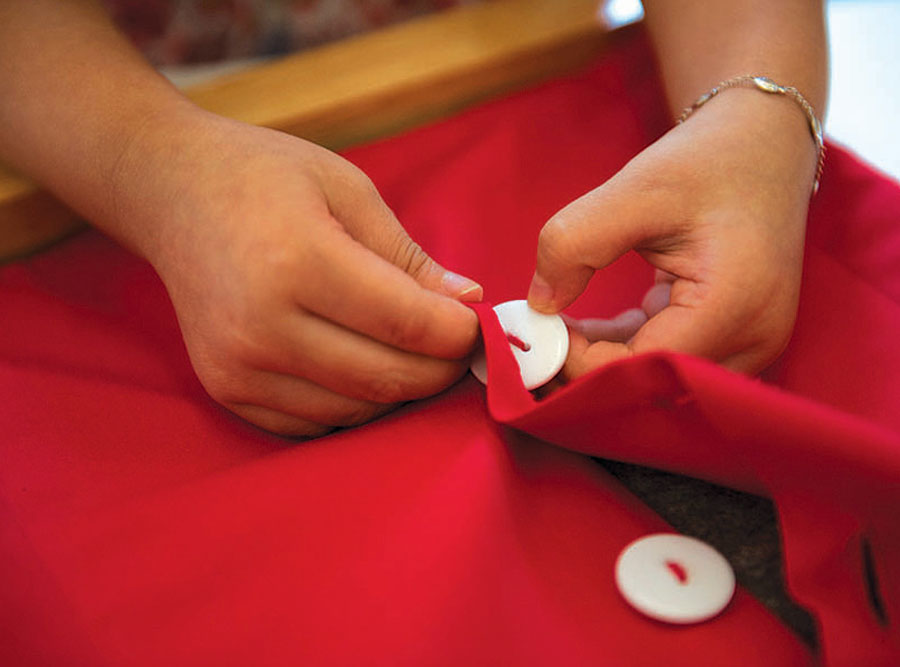
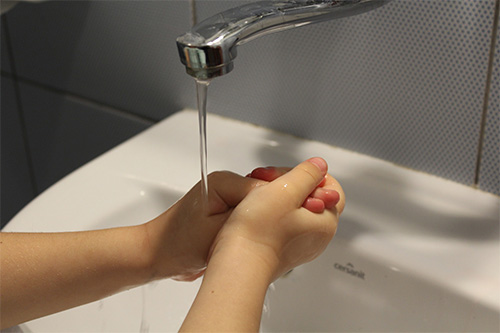
    Some of the first steps towards encouraging independence are for children to tidy up after certain routines. The children’s house practises the Montessori Method while training children to be independent by allowing them to put away and wash dishes, keep their toys, wash their hands, and using the washroom on their own. Montessori schools are also equipped with child-sized equipment, so children can fully utilise the facilities without much help. The first few trials will require teachers’ guidance and supervision. However, as their independence becomes a habit, children will learn about the importance of doing certain things on their own and gradually improve as time goes by.
    Freedom To Choose
    In Montessori classrooms, children are given freedom, from being allowed to choose their own materials, activities to work on, and taking a break by themselves. Montessori teachers place materials and items that make up of children’s choices within their reach. This empowers them to practise independence in the classroom and feel accomplished when they can handle certain things on their own.

    Parents can also train their children to make independent choices and allow them to experience the impact of their decisions. Let children make safe and simple choices such as asking if they want to bring their sports attire to school. If they choose not to, they will not be able to participate in the outdoor activities. Thus, the child will learn from this experience and consciously make better choices next time.

    Independence In Socialising

    Teachers in a Montessori preschool observe children’s interaction with one another. It is common for children to experience different phases as they attend preschool with their friends. On some days, a child may want to work alone, and on other days, they may seek a partner to work and play with.

    Teachers and parents should refrain from controlling who a child interacts with, but to allow them to socialise with peers of their choice. This is because they are naturally aware of their needs, and are working towards achieving it at their own pace. Giving them freedom to socialise also shows respect to their choices.

    Shape Confident Leaders Of Tomorrow

    An article promoting independence by the Australian Childhood Foundation says: “It can be a common pitfall for busy parents to do things for children that children are capable of doing themselves”. Helping children foster independence is indeed a challenging task for parents and teachers. However, with the right method and materials to aid children to be self-reliant, they will be ready to take on challenges of adulthood in the future.

    Independent children will also grow into individuals capable of looking after themselves physically and emotionally. Teachers and parents who guide children to be independent have given them the freedom to experience life and its lessons that follow, which shape them to be confident and responsible leaders of tomorrow. They will also be able to enhance their problem-solving skills and make better decisions in lessons learned from previous experiences.
  • Huge Gain With A Humble Beginning

    Huge Gain With A Humble Beginning

    Nurturing a child is important, but it’s no easy task, especially when it comes to lifelong learning. The children’s house, the leading Montessori preschool in Klang Valley with its humble beginnings, is committed to transform the process of children’s education that will shape their attitudes when they transition into adults to contribute to society and make a huge difference. For more than 30 years, The children’s house has expanded exponentially, with more than 10 schools throughout Selangor and Kuala Lumpur. With the Montessori method, The children’s house is set to go even further as Malaysia’s leading Montessori preschool.

    How did the preschool prevail for more than 3 decades?

    A Life-Changing Choice

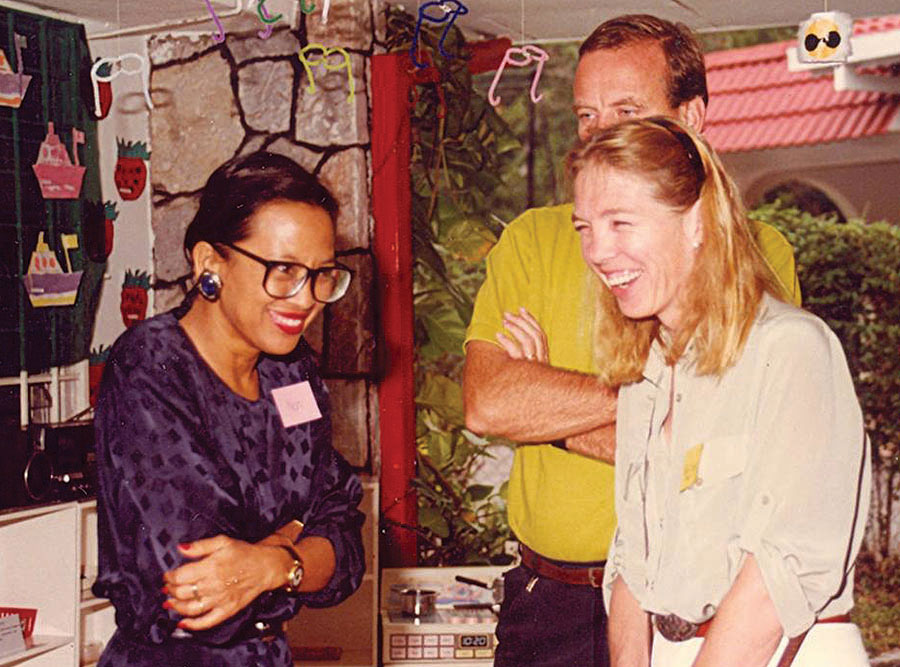
    Nan Civel was caught in an unfulfilling career and felt that she needed a shift in her life. It took her a single sheet of a leaflet to change her life forever. She discovered the existence of the Montessori Method and was determined to transform her life by bringing Dr Maria Montessori’s legacy to Malaysia to provide the best early years education to children. Walking on the path that Dr Montessori graciously paved for aspiring educators in early childhood, Nan knew that this was her true calling. She adopted a baby soon after, and as a wife, a mother, and educator moved forward with steely courage to set up the very first complete Montessori preschool in Malaysia, called The children’s house.


    The Montessori Method

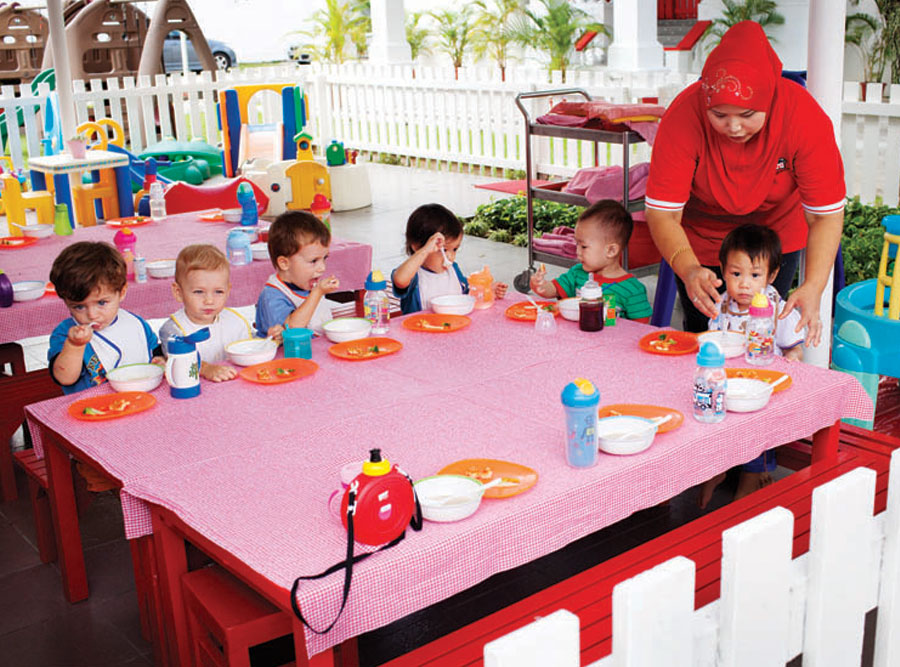
    To be the longest-established Montessori preschool in Malaysia, The children’s house needed to have a curriculum that could be applicable for each unique child. The Montessori Method has a huge role in fueling The children’s house evergreen popularity among parents. One of the main elements that makes the method stand out is its focus on nurturing a child to be gracious, courteous, kind, and compassionate yet intellectually inclined at a young age. At The children’s house, children are taught basic self-care such as washing their hands before and after meals, table manners, teamwork, courtesy and compassion through simple and regular routines.

    The unique teaching approach created by Dr Montessori is still effective to this day, and The children’s house has been using them ever since the establishment of its first school in Batai. The Montessori Method and its materials focus on Practical Life, Sensorial, Language, Number Work and Culture—crucial elements that are needed in ensuring a well-rounded growth in each child.

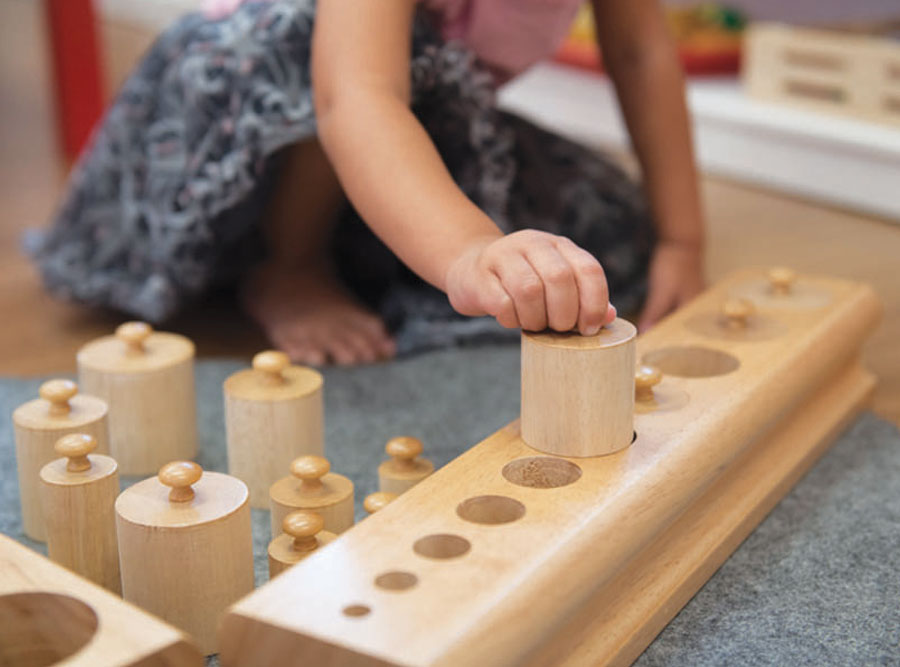
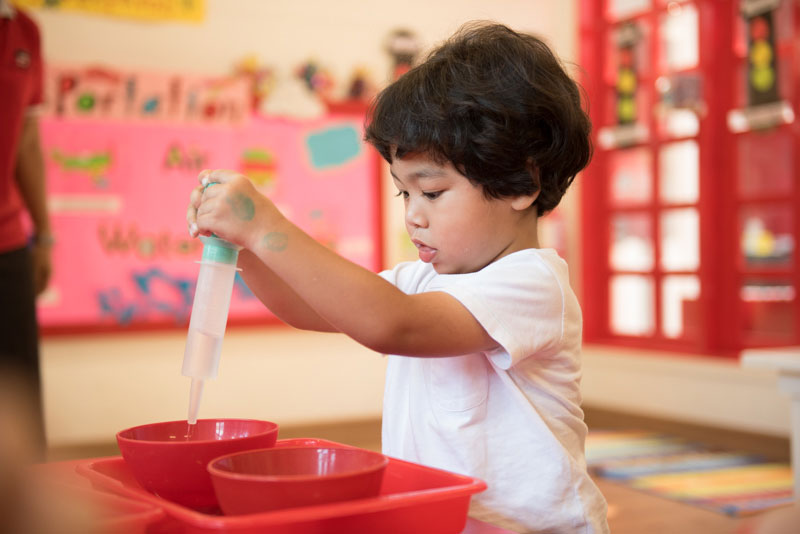
    The didactic materials are meticulously sized-down to fit into children’s hands, enabling them to fully explore their surroundings with their senses. Children imitate physical tasks in Practical Life, using tools like trays, jugs, bowls, spoons, tongs and dressing frames to develop their concentration, movement coordination, sense of order, and independence. Sensorial materials provided are made to refine a child’s senses, triggering them to learn and expand their vocabulary as they explore the world through their senses.


    Language materials are made to help children gain better control over writing instruments and form letters of the alphabets using their stereognostic sense, enabling them to learn reading and writing better. Materials for Number Work provide an excellent opportunity for children to learn calculation and master complex terms like decimals, odd and even numbers. In Culture, children are exposed to a wide range of topics like biology, botany, zoology, geography and history along with the integration of music, arts and craft. The combined materials and subjects along with fun nature walks enable children to gain a better understanding of their environment and the world. Children are also free to choose which materials to work on at their own pace—this is how they truly and fully grow into well-rounded individuals.

    Dedicated Teachers

    The teachers of The children’s house are made up of individuals who share the same mindset as the school: to emphasise lifelong learning when educating children. Children and teachers share a unique bond at The children’s house, with each child fondly calling each teacher as ‘Aunty’. This teacher-child bond is a pride of the school as it takes a great deal of genuine passion for teaching children to achieve this.


    Each teacher, or Aunty, possesses the traits of an ideal educator for early years education. The Aunties always navigate children towards the path of gaining independence. While keeping in mind the need for them to learn things on their own, teachers at The children’s house act as facilitators in lessons, giving children ample space and time to explore their surroundings on their own using Montessori materials. The Aunties are aware that they are the children’s role models in preschool and set the best example for them through their acts of kindness, mannerism and compassion. Aunties at The children’s house are qualified with a Diploma in Montessori or Early Childhood Education and have received training in the Montessori method. Some of them even have more than 10 years of experience teaching in The children’s house! Their wholehearted dedication in educating children has provided a strong pillar that supports the school’s long-lasting reputation as Malaysia’s best Montessori preschool.

    “…my daughter wakes up every day and can’t wait to go to school. She loves her aunties, her friends and the great environment she can explore.”  -Parent

    Supportive Parents

    Dr Maria Montessori, the founder of the Montessori Method, believes that parents, educators and caregivers all play a huge role in stimulating healthy brain growth for children. Having lasted for more than 3 decades is indeed an impressive achievement for a preschool, and for The children’s house, this milestone is also due to the parents’ endless support and faith in the school’s core values. Parents understand and support the Montessori Method to be used as the school’s curriculum, as they have seen for themselves the positive impact that it brings to their children.

    “…she feeds herself and chomped up all food that was given to her at school. She could identify 96% of all her body parts, sing a handful of songs and managed its lyrics.” -3 Batai Parent

    Parents are also actively involved in the school’s event and celebrations, accompanying their children in fun activities and games. The children’s house believe that parental support creates a circle of love, harmony and mutual respect. When parents experience a celebration with their children at school, making crafts and trinkets together, it also boosts a child’s self-esteem and confidence. The parents have absolute faith in the school’s ability to nurture children into lifelong learners, knowing that each time their child goes to school, they are in the best hands that are capable of cultivating confident, courteous, independent and respectful individuals.

    Some of the parents are even alumni of The children’s house. Dominique is the first child in the very first preschool at The children’s house, who is now a chiropractor with his own clinic in France. His fond memories at The children’s house have stayed with him until this day.

    “I loved the red school bag and carried it everywhere! Now I cannot describe the bliss of being a father.”

    Celebrating Life With Children

    “We shall walk together on this path of life, for all things are part of the universe and are connected with each other to form one whole unity.”  –Maria Montessori

    At The children’s house, children come together as one as they work together, play together, learn together and explore their little worlds together. It is the job of teachers and support from parents that unite The children’s house community together as one. From a humble preschool that expanded to more than 10 branches, The children’s house has come a long way, producing individuals who are set to bring great contributions to society through high-quality early years education—and the school will continue growing as Malaysia’s leading Montessori preschool while celebrating life with children.


  • Earlier Preschool, Happier Child

    Earlier Preschool, Happier Child

    You want the best for your child, but the endless parenting research puts you in a deeper concern. You are unsure of which advice to follow. This is especially true when it is time to prepare your toddler for the next stage of life. The idea of preschool sounds great, but you cannot help but to doubt the necessity of it. Well, guess what? Sending him to preschool earlier provides life-changing benefits that help in his development.

    Promotes Social Development

    The first six years of life are crucial for critical learning. A child develops rapidly in his first six years of life, hence, making it crucial for children to gain a firm basis in one the most fundamental elements in life – social skills. Sending your child to preschool earlier means he has the opportunity to grow socially as he interacts with his peers and teachers.

    In an article from the Star online, Datuk Dr Chiam Heng Keng, founding president of the Early Childhood Care and Education (ECCE) Council says: “The foundation needs to be laid. Critical learning happens within the first six years, so the window of opportunity is very small.”


    When you put your child in preschool, he will be separated from his home and family to face new environments, look at new faces and interact with new people. As he mingles with his peers and talk to teachers, he will pick up essential communication skills, learn to read body language as well as practice empathy. This then contributes greatly to the social development of a child, especially if he or she is the only child at home.

    Improves Progression to School

    Children who attend preschool will experience a smooth transition to their next stages of education like kindergarten and school. Director of the National Institute for Early Education Research (NIEER), Dr W. Steven Barnett says: “Children who attend high-quality preschool enter kindergarten with better pre-reading skills, richer vocabularies, and stronger basic math skills than those who do not.”

    Your child will experience a smoother progress in school because he had already learned the basics of reading, writing, and even numbers in preschool. Preschools are known to conduct teaching in enjoyable ways to promote effective learning among children. As your child joins fun activities with his peers in preschool, he is indirectly learning the basics of calculations and vocabulary that are seamlessly incorporated into lessons. As he carries forward the knowledge obtained from preschool to school, your child will be a little ace in class in no time!

    In preschool, your child also gets to quench his thirst for answers as he asks his teachers interesting questions. You will find your child freely expressing his creativity when he transitions to school because he has been exposed to a creativity-triggering surrounding since his preschool days.

    Builds Confidence

    Preschool is a place where your child learns about self-esteem, effective communication, responsibility and leadership. All these are fundamental in nurturing your child to be a confident individual. Activities in preschool involve children learning how to be independent. They scoop food, set tables, water plants, arrange materials and learn to clean up.

    When children succeed in completing a task, they gain confidence and self-esteem, knowing that they can also do things on their own without help from adults. It is important for a child to learn to be independent, and in a way, a process of separation from his parents as this greatly affects children’s decision-making and problem-solving skills as they grow older. Independence is best to be nurtured when a child is young so that he will make it a lifelong habit that eventually readies him for the demands of adulthood, says Dr Jim Taylor, an American specialist in parenting psychology.

    Children are such curious and creative individuals. Each mind is unique and expressive, making it fundamental that you allow them a safe and healthy environment where they get to develop as well-rounded individuals. A little goes a long way, so put your child in preschool earlier and witness the positive difference your action can make.

  • Getting the Best for Your Child at TCH Bukit Jalil City

    Getting the Best for Your Child at TCH Bukit Jalil City

    Deciding on a preschool takes some effort as there are many preschools to choose from offering a variety of curriculums claiming to be the best. And after all the research and school visits there then lies the question: “What if my child cannot fit in? What if he won’t stop crying? What if he hates his teacher?”

    Consider this, what if you can send your child to a leading, longest-established Montessori preschool in Malaysia that has been trusted by parents for more than two decades?

    The children’s house is opening its doors this April in Bukit Jalil City especially for working parents looking for a preschool in the area. What’s more bring your child with you to experience the fun-filled, nurturing and beneficial environment of a true Montessori preschool at its Grand Opening on 20 April (Saturday) from 10am to 2pm!

    New Experiences in New Environments


    At TCH Bukit Jalil City’s Grand Opening, your child will get the chance to explore new environments of a preschool. This way, they wouldn’t feel out-of-place or anxious when it is time to leave them under the care of the Aunties. The Bukit Jalil City preschool offers a bright and exciting environment that forms a great learning ground for children. Your child will be surrounded by other children of the same age, which provides a great opportunity for your child to experience a play group environment where he can interact with his peers. This contributes greatly to the social development of your child, especially if he or she is the only child in the family.

    Let Your Child Experience A Montessori Education

    The Montessori Education is different from other approaches. As the first school in Malaysia to adopt and incorporate this method in its classes, TCH has successfully created an environment that is conducive to learning that inspires a child to develop a love for learning.


    By bringing your child to the Grand Opening at Bukit Jalil City, he or she will be immersed in fun-filled activities that incorporate didactic materials that support the Montessori core values like Practical Life, Sensorial, Language, Number Work and Culture. Your child will be intrigued to explore the world on his own as he is free to choose from various materials to work with. Here in TCH Bukit Jalil City, teachers are just facilitators who step in to guide your child where necessary as the Montessori method believes in letting a child express their unique, magical minds by learning and developing interests on their own.

    Witness Montessori Educators Interact With Children

    Children can meet the staff at TCH Bukit Jalil City and interact with them, familiarising themselves with the presence of trusted teachers and forming a bond that helps in the child’s future development in class. Gain assurance that your child is in good hands as you watch the Aunties interact with every child with care and passion at the Grand Opening. A nurturing teacher-child relationship is crucial to promote strong bonds, warmth and positivity between educators and children, according to a research by Hamre BK and Pianta RC in 2001 on early teacher-child relationships and the trajectory of children’s school outcomes. Witness how every educator of the preschool is confident in handling children as all of them have received Montessori training. Besides, the low children-teacher ratio means your child’s development is properly monitored.

    RSVP Now

    TCH Bukit Jalil City will be looking forward to meeting you and your child at its Grand Opening. RSVP now and be prepared to be fully immersed in learning, the Montessori way! You will also be able to  enjoy more than RM1,000 in benefits when you enrol your child on the day!

  • Why The Montessori Method Stands Apart

    Why The Montessori Method Stands Apart

    Parents of Bukit Jalil rejoice! The children’s house is extending its welcome to you and your child! Situated in the heart of Bukit Jalil City, the centre’s strategic location is ideal for busy working parents in the vicinity of Bukit Jalil to send their children to a trusted preschool. The children’s house has absolute confidence in providing your child the best early years education.

    Here are some things you should know about The children’s house:

    Longest-established Montessori Preschool in Malaysia

    Yes, you’ve read it right. Enroling your child in TCH means your child is in the most trusted hands of Malaysia’s longest-established Montessori preschool. It all started when Nan Civel, or fondly known as Aunty Nan opened the first TCH preschool in Damansara Heights. Inspired by Dr Maria Montessori, Aunty Nan developed great respect for the unique and magical minds of children. As she delved deeper into Early Childhood Education research to gain greater observation of children’s minds and the Montessori method, The Teacher’s House, a centre that provides in-house training was established where professional and trusted educators are trained to facilitate in the optimal learning and development of children.

    Co-founder, Nur Jiwawati Anis fell in love in Early Childhood Education and began to involve herself in improving the quality of children’s experience in TCH by injecting creativity-inspiring ideas into the elements of the Montessori method. Educators of TCH highly value teamwork by working together as a family instead of co-workers while sharing the same ethics and respect. The TCH community always puts children first to ensure their development and well-being are taken care of by establishing a harmonious relationship between parents and educators.

     Standing Out From Other Preschools

    Other preschools in Malaysia may have featured the Montessori Method but none are as comprehensive as The children’s house. The children’s house is Malaysia’s first ever preschool to adopt and apply the all-inclusive Montessori Method of education and it has positively impacted the country’s early childhood education landscape.

    Your child will be immersed in the Montessori Method that is further enhanced by dedicated staff who care deeply for the development of children under their care. The co-founder is personally involved in uplifting the quality of children’s learning experience. Nur Jiwawati Anis has been researching and applying new ways to make each class more exciting and informative for the children. Rest-assured that you child is attending a preschool recognised for its evergreen high-quality Montessori education throughout the country.


    Benefits of the Montessori Method

    The children’s house believes in the Montessori Method and the benefits that it would bring to children in the long term. TCH has all the didactic materials needed to support the 5 core values in the Montessori Method: Practical Life, Sensorial, Language, Number Work and Culture.

    In Practical Life, children are engaged in home-like activities that require them to utilise common materials like trays, jugs, bowls, spoons, ladles, tongs and dressing frames. These allow children to imitate common physical tasks such as carrying, scooping and transferring, enabling them to develop greater focus at tasks, movement coordination, sense of order as well as independence.

    Sensorial materials help a child make sense of the environment. Materials are made to be multisensory, sequential and self-correcting to refine the child’s senses. Using Montessori-based language materials, children are able to gain better control of the writing instrument to easily form the letters of the alphabets using stereognostic sense in which a child feels an object and recognises it based on the feeling.

    Number Work materials effectively help children master complex concepts like addition, subtraction, multiplication and division including zero, odd and even numbers. Culture activities ensure children have a better understanding of the world. There are also activities in the school that involve nature walks and talks, helping children develop an appreciation towards nature and life forms.


    This method makes a child happier as learning is done in a rich and fun-filled environment that motivates children to enjoy learning. Here in TCH, children are given the freedom to choose their own materials and work, whereas teachers are only facilitators who guide children when necessary. This method allows children to explore their interests in various fields, giving them time and space to learn and develop skills on their own.

     Montessori Method Around the World

    There are Montessori schools around the world like the Cambridge Montessori School (USA), Toronto Montessori Schools (Canada), Perth Montessori School (Australia), Seisen International School (Japan) and Oxford Montessori Schools (England). This shows that the Montessori Method is globally recognised and practised as an effective teaching method for crucial stages of life.

    TCH is proud to utilise the method in the most fundamental stage of life – preschool. The Montessori method nurtures children to be well-rounded individuals who are confident, responsible as well as well-mannered and intelligent, which explains why it has a large presence in Malaysia as well as Singapore.

    Visit Us at Our Grand Opening!

    All parents want the best for their children, and TCH is ready to provide the best form of education that will shape children into well-rounded individuals ready to be leaders of tomorrow. Witness for yourself the enriching early years education TCH can offer at its Grand Opening on 20th April (Saturday) of its latest preschool at Bukit Jalil City from 10am to 2pm. Bring your little ones along and let them experience the Montessori education through fun-filled activities. It’s going to be awesome!

  • Control or Comply: Why You Must Limit Your Child’s Screen Time

    Control or Comply: Why You Must Limit Your Child’s Screen Time

    Your child throws a tantrum in public, making a scene that attracts unwanted attention from people around you. You hand over your smart phone and let your child watch a cartoon. Suddenly he is not crying anymore. Even better, he actually sits still and watches cartoons for hours without disturbing you. Sensing great relief, you proceed to attending to your chores while enjoying a moment of silence.

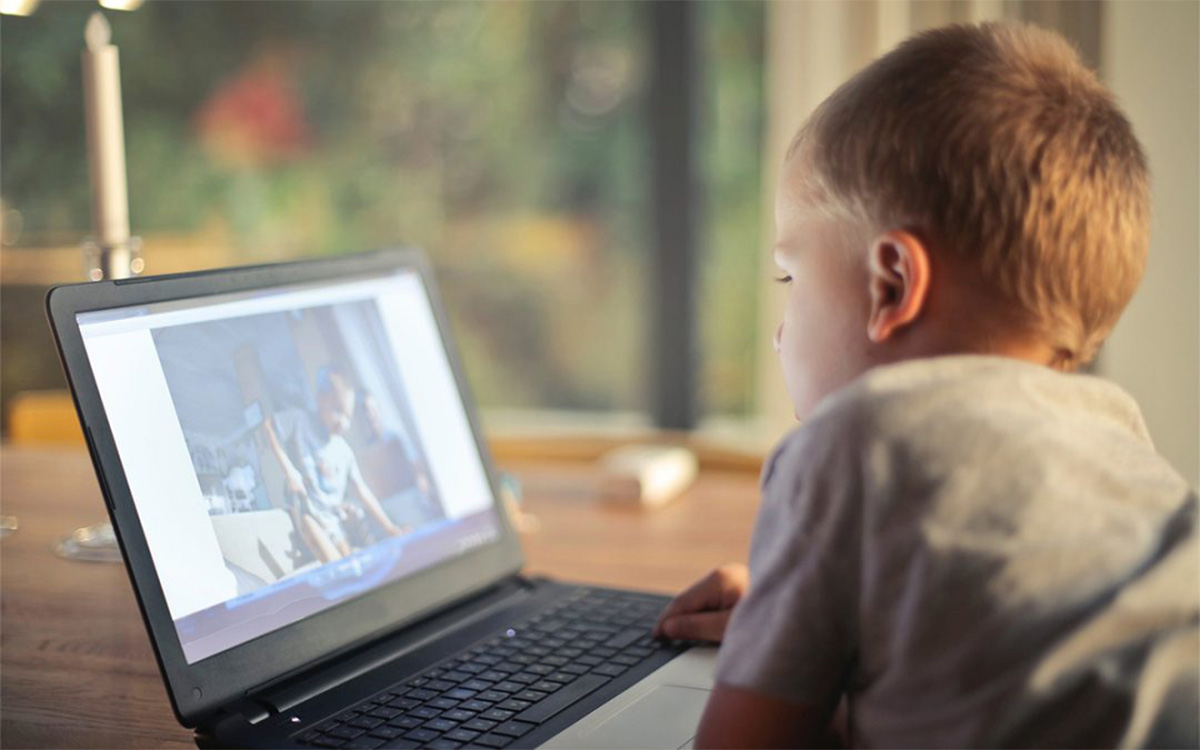
    Sounds familiar? You are not the only parent doing this. Parents nowadays are making it a habit to distract their children with smart phones or tablets by letting them watch cartoons or play games with the devices. In fact, a research on Children’s Media Use in America in 2013, reveals that 38% of children who are less than 2 years old have used a mobile device for media, hence, gaining exposure to screen time. Two years ago, the percentage was only at 10%. With more parents feeding their children with more screen time to keep them calm, we know that this method is considered as one of the best ways to keep children distracted. It may seem like a great short-term relief for parents, but have you considered the side effects this method would bring to your child in the long run?

    Blue Light Damages Eyesight

     Screen devices are such handy entertainment for children. One device is enough to keep them occupied for hours without a hint of a meltdown. However, along with convenience comes great consequences that will affect children’s health. Excessive exposure to blue light that is emitted from the screens affects children’s eyesight. Blue light is a light spectrum that makes up the illumination visible to the eyes. An article written by Troy Bedinghaus that was reviewed by a board-certified physicians, mentions that besides providing the usual glow we see on screen devices, blue light also amplifies the mood of a person. This may be the reason why children love staring at these devices for a long time. Prolonged exposure to blue light is damaging to a kid’s eyes. Children are still growing and are yet to attain full maturity of their eyes. At the growing stage, children’s eyes do not have fully developed pigments that protect the eyes by filtering harmful blue light emitted from the screens. Studies have also shown that long exposure to blue light causes retinal stress that will potentially result in a chronic eye disease.

    Lack of Sleep

    Blue light exposure also causes the suppression of the release of melatonin. The hormone functions as a reminder that tells us when to sleep. As blue light withholds the release of this hormone, children lose sleep and hence, causing more problems to follow like irritability, behavioural issues and weight gain. Researchers at the Penn State College of Medicine discovered that “using any device at bedtime was associated with a statically significant increased use of multiple forms of technology at bedtime and use in the middle of the night, reducing sleep quantity and quality.”

     Changing Brain Structure

    Too much screen time also affects the brain structure of children. As they are so used to the presence of screen devices in their lives, all they have seen and understood about their world is done through a two-dimensional screen. In real-life situations, they might have a hard time transferring and applying what they have watched and learned from a 2D screen to a 3D environment. For example, stacking building blocks on a screen is way different from stacking real-life blocks in an actual play area. All your child has ever experienced is swiping those blocks on a screen instead of actually touching them, feeling each texture and stacking them in real-life.

    Deteriorating Social Skills

    The impact screen time has on children’s social life is more severe than you think. With screen devices largely used, children slowly inch away from the actual form of communication: face-to-face interactions. As children are so caught up with their tiny world on lit screens, they lose the connection with people in the real world. This will cause children to not feel remorse when they make remarks because when they are online, they do not see actual people feeling hurt or offended by mean comments. Psychologist Jim Taylor says that “Kids are spending so much time communicating through technology that they’re not developing basic communication skills that humans have used since forever. Communication is not just about words.”

    Social skills should be developed at a young age so children will not be nervous when it comes to face-to-face interaction, but people are now replaced with screens and these children seem to be happy to avoid direct communication by focussing on screen devices – a serious issue that leads to social anxiety. Excessive screen time means that children will have less time and opportunities to interact with their peers and family members, reducing chances for them to recognise facial expressions, body language and learn empathy.

    Triggering Tantrums

    Lastly, contrary to parents’ belief that letting children use smart phones works as a good distraction, allowing children more screen time actually sparks more tantrum, especially when it is time to part with their much-loved ‘toy’. Some parents would give in and hand their smart phones back to their child to stop them from crying – and the cycle continues.

    How much screen time is optimal?

    It is best to limit the screen time of children aged between two to five years. The ideal screen time for children between these ages is one hour a day, as suggested by the American Academy of Pediatrics. When implicated, this method will bring positive benefits to children. They will physically participate in games and play outdoors with their peers, gaining a good amount of sunlight and fresh air – an element that is so crucial yet obsolete among children nowadays who are too immersed into screen devices. A study led by an associate professor of psychology, Douglas Gentile, Ph.D. from Iowa State University shows that a controlled screen time for children has affected their social, academic and physical development. By allowing children to screen time for a limited amount of time, children have more sleep, were less aggressive, received better results in school and have achieved lower body mass index.

    It is understandable that a child born in this fast-paced world needs to keep up with growing times, which means exposure to screen devices is inevitable especially when they are in school where these devices are largely used in lessons. However, at home, you can control your child’s screen time instead of letting him fully conquer it. Implicate a strict rule and make sure your child understands the importance of having controlled screen time. It takes time and a lot of patience to make this happen but the difference is prominent and you will be glad your child is not another kid glued to a smart phone or tablet during a family dinner. In the future, you don’t want to text your child who is sitting right next to you just to talk to him, do you?

  • Activities for children & parents for the school holidays in Kuala Lumpur

    Activities for children & parents for the school holidays in Kuala Lumpur

    School holidays are here and just like any other year you are looking for ideas to keep your little one engaged. School holidays are a great way to bond with your children. You get to spend quality time with them and be an active part of their world.

    To make your life easier, we have compiled a few ideas of things to do this time and make the year-end memorable for your family.

    Enjoy the sun at KLCC Park

    Just head to KLCC park and let your children enjoy the children’s park and the water park. You can laze around in the cool shade of trees with a book in your hand. If you feel hungry, head to the Suria KLCC food court and treat your kids to whatever they like, life cannot get better than this. If you stay till evening, you can enjoy the Lake Symphony at the KLCC fountain too. We’re sure the kids will love it.

    Take them for a cultural performance

    Exposing children to culture is important and what better way than to take them to some local performances. Malaysia Tourism Centre Matic holds hour-long dance performance every day at 3pm from Monday to Saturday. There is also a cultural show at Central Market every Sunday at 8 pm. A little culture will go a long way in giving them fresh ideas and create a different perspective for them.

    Spend some quality time at KL Eco-Forest Park

    Spend a few hours enjoying the greenery at the KL Eco Forest, formerly known as Bukit Nanas. Acclimatise your children to different kinds of trees and enjoy a nice canopy walk. You will be able to see many types of birds and monkeys. You can also take your kids to the mini zoo inside. There are many trails and walks to enjoy. The Eco-Forest Park is easy to access from Menara KL and Jalan Raja Chulan.

    Reach for the stars at the Planetarium

    A visit to planetarium can be mesmerising especially if you are a kid. The idea of new stars and a whole new world out there can open the floodgates to the imagination. Although the KL Planetarium is not the best in Asia, yet, there’s much to learn here and definitely deserves a few hours. They run 3D films that are fun for enjoying the 3D experience. A really cool place to visit during the holidays.

    Cycle around the city

    Do your kids love to cycle? If the answer is a big yes, then head to the many cycling areas in the city such as Taman Tasik Titiwangsa or Desa Park City. On Sundays, Publika Shopping Centre becomes a cycling path. Cycling is not only healthy and fun, it is also a great way to spend time with your little ones.

    Take them to a skate park

    If your children love skateboarding or rollerblading, you can visit the skate parks in Mont Kiara, Putrajaya and Shah Alam. Nothing like a little adrenaline to get the blood pumping and create some excitement and competition within the family. Some places also offer free informal skating lessons such as the Wheel Love Skateshop. You can find them on Facebook.

    Spend a crafty weekend

    The Islamic Art Museum Malaysia organises art and craft workshops every weekend for children aged 4 to 12 years. Children under 6 years of age have to be accompanied by an adult. Each workshop has a specific theme and starts with a storytelling session. They are ideal to enhance your child’s imagination. The timing of these classes is from 3pm to 4.30pm every Saturday and Sunday.

    Volunteer for gardening

    Planting trees are so important and it is imperative that the young ones learn this from an early age. Visit the Free Tree Society in Bangsar and volunteer at their nursery. They will provide all the tools. You will be planting new plants, rearranging pots or be a part of the landscaping. It’s a fun activity and definitely a great lesson for your kid.

    Take a trip out of the city

    There is no better way to bond than going on a trip together. More so if you are a family. Pack-up, get the map out (or Waze!) pick a location and go on a roadtrip for a weekend away.  We are spoilt for choice when it comes to travelling in this country. Pack your kids’ favourite snacks, play car games, sing songs and enjoy the beautiful scenery. They are going to love it.

    Visit the National Science Centre

    To merge fun with learning, take your child to the National Science Centre. It has innumerable exhibits and mini-activities to keep children engaged and excited. Tickets are priced reasonably at RM6 for visitprs over 13 years of age and RM3 from children from 7 to 12 years. Children below 3 years can enter for free. They hold a science show every day at 12pm and 3pm where they involve children to exhibit scientific experiments. It’s completely fun while you learn.

    Hope these ideas helped you plan a range of fun activities to keep your child engaged. Enjoy the holiday season before another round of school days starts.

    Have fun!

  • Consider starting preschool in November instead of January

    Consider starting preschool in November instead of January

    Starting kindy a few months earlier could make a world of difference to your child and decrease your level of stress and anxiety! Read on to find out how…

    It’s going to be time for your child to join preschool in January and it wouldn’t be wrong to say that you are both excited and anxious at the same time. You want your child to mingle with the other children, make friends, learn their alphabets, numbers and most of all enjoy themselves! But then you end up thinking about everything that could go wrong, and your bubble pops!

    What if your child can’t cope up with the new atmosphere? Oh, the ceaseless crying and the painful goodbyes that you have to go through. After all, separation anxiety is a tough experience for every child, and this is going to be even worse in a room full of weeping toddlers come January!

    Not to forget the entire period of preparation that goes into getting your child ready for preschool. Backpack, lunch box, social skills, potty training, planning playdates, and practising being away from each other are few of the many priorities on the to-do list of every parent. And above all, you need to set up your schedule, get organised and shift your routine to ensure you can meet all the unforeseen hurdles that may come your way.

    The first few weeks of preschool is like a rollercoaster ride for every parent and child until both sides learn adjust to the new routine and get a hang of things. As such, why not get the adjustment period out of the way before January even comes along?

    Keeping in mind that preschool is the beginning of a new phase in your child’s life, joining a preschool early can be a good idea on many levels. Here are some of the reasons why:

    An extra month to cope

    Avoid the last-minute drama by giving your child an extra month to fit into the new set-up and get acquainted with their surroundings. It gives you some extra time to relax and help your child adapt without worrying about keeping pace with the other children. Not only that, but it also provides a window to coach him step-by-step about school, paving the way for a smoother transition period.

    Your child will get extra care, attention

    By starting a month early, children have the opportunity to join an existing class. They get extra attention and care from the teacher who now has the time and space to give your child all the TLC they need, and make friends with other children who are already used to school. This will go a long way in easing their nervousness and help them overcome their shyness. It’s also not so stressful for the teachers and leads to an overall good experience for the child.

    Avoid the back to school rush

    Adjusting to a new routine is not only difficult for the kids but also for the parents who have to constantly put effort in ensuring the little one has everything he needs. Joining preschool early gives you an opportunity to ward off the stress and enjoy the learning journey with your child. And if you are the parent of many children, your toddler’s shoes, bags and books can be sorted a whole month earlier before big brother and sister have to be dealt with. That’s definitely a solution to having to buy multiple everything at the same time!

    It helps your child become more confident

    Imagine the first day of school in January, when there are at least ten children crying and feeling alienated in the new environment they have been placed in. Your child who has already been in school for a month can now be the old pro, confident enough to take up a leadership role and help the new kids settle in. This will help them gain more confidence and promote the development of social skills in the process.

    You have time to find another preschool

    Starting early gives you, the parent greater leeway to get it right. You have more time to see if the learning environment meets the individual needs of your child. In case it doesn’t, you do not need to panic as you have extra time to find another preschool that suits them better. The children’s house welcomes children to join our classrooms in November and December, before the new school year starts. You can do so by coming for a school tour.

    Click here to find a school closest to you.

  • HFMD precautions for children that every parent needs to know

    HFMD precautions for children that every parent needs to know

    Everything you need to know about HFMD and its preventive measures

    HFMD

    The surge of Hand, Foot and Mouth Disease (HFMD) in Malaysia has become a matter of serious concern. The country is on alert as more than 33,000 cases have been recorded nationwide to date. Children under the age of five are highly susceptible to the disease with cases being reported at daycares, nurseries and kindergartens across the country.

    Here’s what you need to know about HFMD.

    What is HFMD?

    HFMD or the Hand, Foot and Mouth Disease is a contagious infection caused by viruses from the Enterovirus genus, most commonly Coxsackievirus A16 and Enterovirus 71. The virus is found in secretions from the nose and throat such as nasal mucus or saliva, blister fluid and stool.

    How does HFMD spread?

    The disease spreads by direct contact with the infected person, the air after sneeze or cough of an infected person or touching your eyes, nose or mouth with unwashed hands after coming in contact with contaminated surfaces or feces.

    What are the symptoms of the disease?

    Though it usually affects infants and children below the age of 5, it can also occur in adults and older children. The signs and symptoms of the disease generally include fever, loss of appetite, headache, sore throat, red rashes on the palms of hands and the soles of the feet, and irritability. It usually begins with fever and red rashes or blisters are observed in the following days.

    Though every infected person might not suffer from all of the symptoms, it is good to seek medical attention if you observe any of these signs in your children.

    How is the disease diagnosed?

    The hand, foot and mouth disease can be diagnosed through physical examination by the doctor who will check the appearance of common symptoms. The doctor or health care professional may also collect a sample from the infected person’s throat or stool to test for the virus.

    What precautions can be taken to prevent HFMD?

    The Health Ministry has been informing the people about the current situation of the HFMD outbreak and the health authorities have advised the people, especially the parents to play an active role in the control and prevention on the disease starting from themselves and their homes. Parents can take these precautions to prevent the disease.

    Wash hands regularly

    The best way to prevent HFMD is to practice good hygiene both inside and outside the house. Washing your hands on a regular basis can reduce the chances of coming in contact with the virus. Teach the children to wash hands before eating, after using the washroom and after coming home from outside.

    Disinfect the home

    Make sure that all the shared places in the house are cleaned on a regular basis by using a disinfectant. It is also important to keep objects like toys and pacifiers clean as they may be contaminated with the virus. Teach the children not to put any toys, other objects or their fingers in their mouth.

    Do not ignore symptoms

    Parents should not ignore symptoms like fever, vomiting, rashes or lethargy in the child. Please take your child to the nearby healthcare centre and get the required treatment. Also, do not take the children with HFMD or possible symptoms to any public places, daycare, kindergarten or schools as it might spread the disease to others.

    Avoid sharing food and other items

    It is good to avoid sharing food, drinks, utensils, clothes, toys, towels and similar objects with others during this time.

    What precautions can be taken by preschools?

    Considering the fact that HFMD majorly affects children under the age of 5 and is easily spread in places where children gather such as kindergartens and daycare, preschools have a major role to the play in the control and prevention of the disease.

    • Preschools should take special care to maintain high standards of hygiene and both at a personal and environmental level. Teachers and staff are advised to wash their hands on a regular basis, especially after using the washroom, changing the diapers of children or accidentally touching the blisters.
    • All the objects, toys or materials used by children including the floor and the toilets should be cleaned and disinfected regularly.
    • There should be a proper facility for the disposal or waste and diapers to reduce the risk of the disease.
    • Schools are recommended to conduct screening for any HFMD symptoms before the children enter the premises.
  • Moulding creativity in young children grows smarter adults

    Moulding creativity in young children grows smarter adults

    How to develop creative thinking in young children?

    Moulding Creativity

    As they grow older, a child’s degree of a success depends on how well they handle the different challenges that life throws at them. Though some problems can be handled with experience and others with good advice, life puts you into tricky situations that demand an unconventional approach. Creative thinking is the key to untangle the complex knots of life. But how can you sow this creativity in your children?

    Following passion

    Sometimes we unintentionally limit our kids in a box of our own expectations. Give your children the freedom to follow their passion. It is observed that children who follow their interests are better at performing it than those who are compelled to do it. Pursuing their interests, keeps them actively engaged and nurtures creative thinking.

    “There’s something about living life with passion and intensity, including the full depth of human experience that creates an environment conducive to creativity. In my own research, I found that affective engagement — the extent to which people are open to the full breadth and depth of their emotions— was a better predictor of artistic creativity than IQ or intellectual engagement,” says Scott Barry Kaufman in the Harvard Business Review.

    Whether your child is passionate about arts, mathematics or science; encourage them to explore their natural inclinations and provide them with an environment that enhances their strength.

    Make choices

    Give your kids the freedom to engage in activities of their choice. As parents, we are often so anxious to raise successful children that we pack their entire day with the activities we choose for them. Take a step back and allow them to think independently and make their own decisions. Young children have the ability to learn and absorb from the environment around them. Unstructured play is as important as the structured activities you plan for them. Children who are involved in unstructured activities get time to use their creativity and imagination. Research reveals that boredom sparks creativity. So it is important to let your kids enjoy the occasional boredom and activities that they love to do.

    Involve them in problem-solving activities

    You can preserve the inquisitive nature of your children by keeping them engaged in problem-solving activities. It is this curiosity which unleashes the creative thinking in your children. Creativity is not about accepting the conventional way of doing things. It offers you different perspectives with the opportunity to choose the best. You can make learning fun by encouraging them to play board games. You can start with the beginner levels of games like Lego and Sudoku which not only enhance their creative skills but also improve their problem solving abilities.

    Reasoning with kids is another way of stimulating their curiosity and creative thinking. Don’t teach them conventional ways of solving a problem. Ask them the different ways in which they can approach a riddle. Creative mindsets are formed through stimulation in an environment that encourages problem solving.

    There can be different ways of encouraging creativity and passion in your child, but it is important to find a caring environment which focuses on inculcating the love for learning in them. A preschool that recognises the uniqueness of your child and works towards guiding them on their individual path is crucial to the all round development of your children. The children’s house understands the influence of early years in the physical, social, emotional and intellectual development. Hence, it provides an environment that is completely centred around the well-being of your child. Every activity has been designed to stimulate the curiosity of your child as he progresses to the next level. A wide range of interesting activities like Tots Arts, Tots music, Tots Read and Tots Gym provide them an opportunity for exploration and problem-solving.

    The Montessori Method of teaching at The children’s house ensures a nurturing environment that focuses on the individual needs and development of your little one. It recognises the innate ability of a child to absorb and learn things when they are kept in a prepared environment. Children are given materials that engage them and help them to discover their natural inclination. It believes in respecting the child by giving him the freedom to select the material he wants to work with. When your children are allowed to engage in a learning activity of their choice without interruption, they get an opportunity to explore their interests.

    The children’s house focuses on the all round development of your child through activities and materials that drive passion and stimulate creative thinking in them. Above all, the method of teaching encourages them to become well rounded individuals who are contributing members of the society.