Author: admin

  • Fun, love of nature at TCH U-Thant

    Fun, love of nature at TCH U-Thant

    Learning in the lap of nature at TCH U-Thant

    The children’s house is proud to present its brand-new preschool in the heart of Kuala Lumpur – TCH U-Thant – a beautiful building nestled among tall green trees. Indeed, nature is at the very core of the preschool. This comes from the fact that there is a deep connection between children and nature. With curiosity and imagination, the outdoors become a big unexplored playground.

    Remember the time you took your children outdoors to play in the lap of nature, how much they enjoyed jumping in puddles, building leaf mountains, playing at the beach and climbing trees?  Pebbles, seashells, grass, rocks, the rain, plants, trees, and sand — none of these came with a guide so our imagination took hold and we were liberated into many, many worlds.

    The rustling of the leaves stimulates the sense of hearing and the fragrance of a flower stimulates the sense of smell; nature stimulates creative instincts and sensory development of the child.  Hence, you cannot ignore the importance of nature play in the all-round development of your child.
    Sensorial play vital

    However, today most children are bound by tight schedules and extracurricular activities. Their first interaction is often with the TV, a tablet or computer. Interacting with nature is restricted to occasional visits to the playground or animated movies about nature. Sadly, they are isolated from the beautiful experiences of nature and develop distaste or fear of heat, cold, rain, and other natural things. This is the beginning of many modern day problems in children like rising cases of obesity, poor eyesight due to continuous exposure to artificial light of screens, plus the loss of opportunity to build resistance and immunity.

    Learning through nature is not an occasional tour of man-made parks, but a part of the every day life where they are given the opportunity to grow in a secure and loving, carefully prepared environment that gives them the freedom to learn by choosing their own materials.

    At The children’s house U-Thant, the Montessori Method recognises the significance of nature or play-based learning in the early years. Every activity is carefully designed to encourage the social, cognitive, emotional and physical abilities of the child. Most of all, it triggers the sense of curiosity and creativity in children, which helps them develop problem-solving skills required to be successful. Dr Maria Montessori wrote about it in the The Absorbent Mind: “Only through freedom and environmental experience is it practically possible for human development to occur.”
    U-Thant maximises nature play

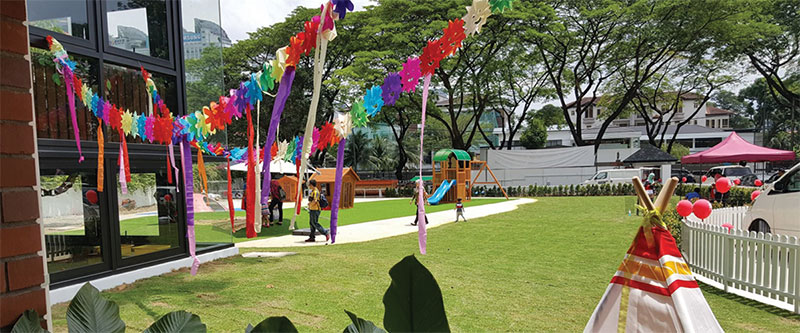
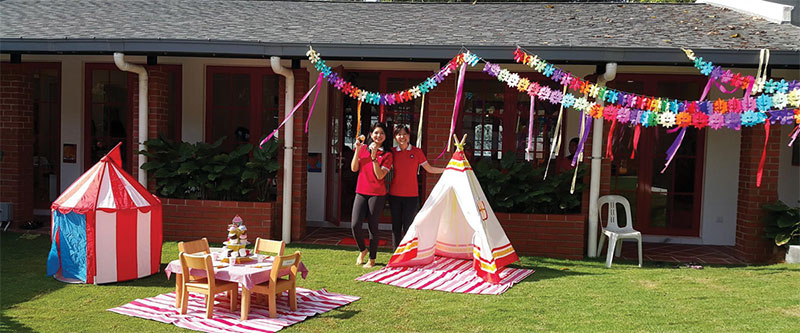
    The Montessori Method believes that every child is born a sensorial explorer, and that’s why The children’s house U-Thant not only incorporates the elements of indoor learning but also provides the best environment for outdoor learning for the little ones. The spacious compound of U-Thant coupled with the exclusive facilities creates a huge outdoor space that is filled with the latest and ‘funnest’ playground equipment that will create a constant opportunity for adventure, not to mention learning.

    Then there is the Alfresco Dining Area! Yes, you read that right, the children will get to dine in the cool air and enjoy the freshness of the surroundings under the shade of the surrounding trees.

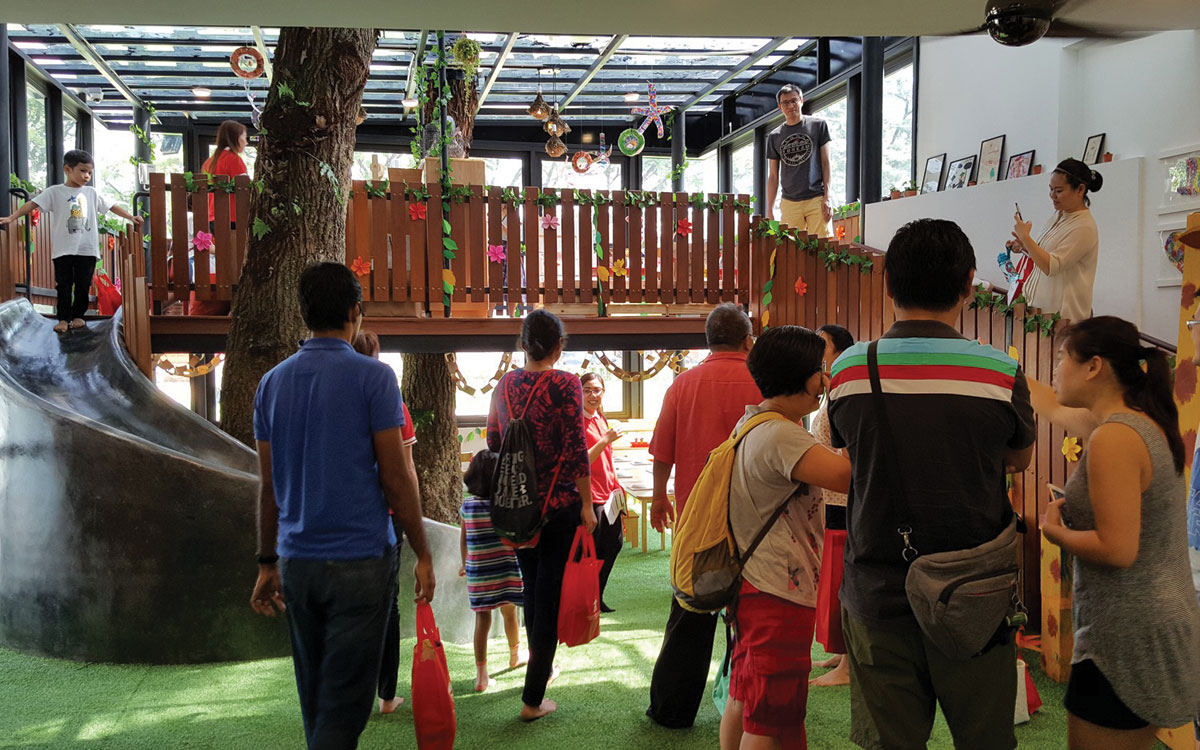
    One of the key features of The children’s house U-Thant is The Atelier Tree. The Atelier Tree is this massive tree with an atelier built around it. Children can enjoy nature while they get busy with their art and craft projects. It is a beautiful space where even the adults will feel inspired to show their gifted side as they work surrounded by full glass windows and roof. This ensures that everyone working in the atelier gets sufficient sunlight and can enjoy the outdoors to get inspiration for creating artwork. All the original work will then be displayed in the Children’s Art Gallery. The gallery will display the children’s masterpieces in an effort to not only appreciate but also encourage creativity in the children.

    The children will no doubt enjoy another key feature of the school – the Wet & Wonderful water play! We all know that children love to play with water and the water play area at U-Thant gives children the opportunity to get imaginative with water! Your child is going to wake-up every morning raring to go to preschool!

    Come on over for a tour of The children’s house at U-Thant. You will find the environment at U-Thant is specially prepared to let your child move freely and interact with nature. As children interact with the environment and learn to take care of their surroundings, a sense of responsibility and kindness develops. Eventually, children learn to identify their emotions, express them, and respond effectively. They develop great self-esteem and it drives them to follow their passion and be the best version of themselves. And isn’t that what each of us want for our children?
  • The inspiring life of Maria Montessori

    The inspiring life of Maria Montessori

    An stirring story of determination and courage

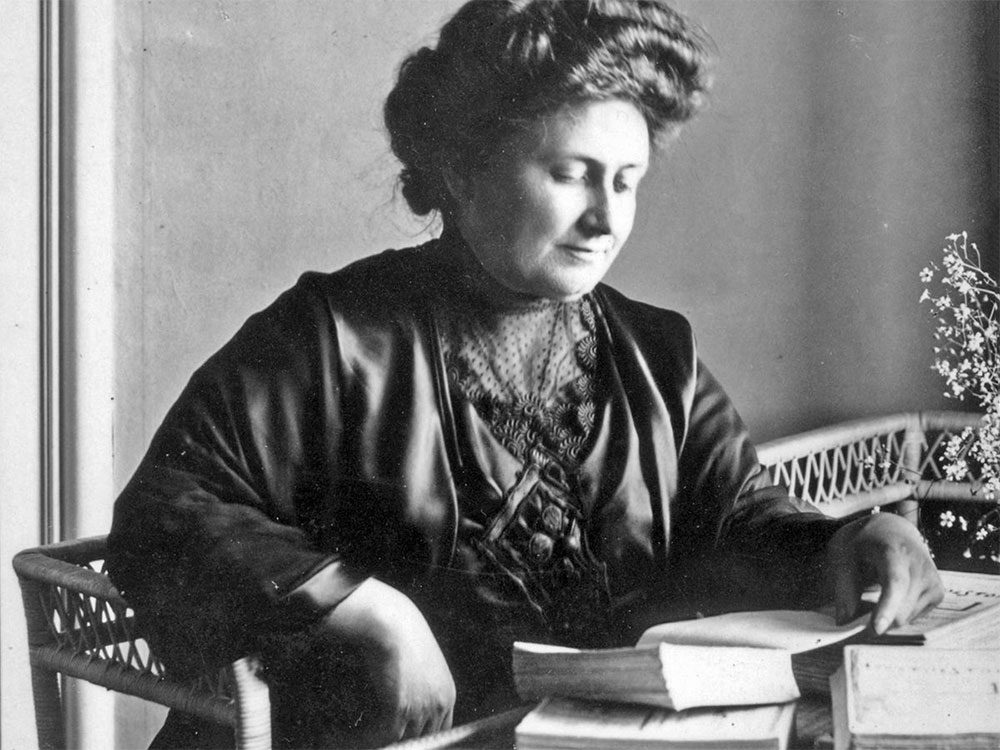
    Maria Montessori was a courageous girl breaking the conventional barriers of education set up for those of her gender in the 1890s in Chiaravalle, Italy.

    As a little girl, she initially aspired to become an engineer. But once she graduated from higher secondary school, she was determined to become a doctor. Despite her parents wishes to make her a teacher, Maria wanted to enter the field of medicine, which was dominated by men. Maria joined the University of Rome in 1890 and became the first woman to join a medical college in Italy.

    Due to the gender bias, Maria faced many obstacles during her study and finally qualified as a doctor in 1896. Dr Montessori was very competent and treated patients from all social classes with the same the respect. She was also a member of Women’s Rights Movement and later joined a research programme at the University of Rome in the psychiatric clinic. Gradually Maria got interested in education and her studies led her to observe and question the teaching methods of children with intellectual disabilities.

    A revolution in early childhood education

    Maria got the opportunity to further investigate and improve the teaching methods when she was appointed as the co-director of Orthophrenic School. The school admitted a number of children with different disorders and developmental disabilities. She decided to approach the task in a scientific manner by analysing and observing the different teaching methods to find the one that was best for the children. Maria passionately worked throughout the day and compiled her notes at night.The unexpected progress of the children made the programme a big success.

    In 1901, Montessori began her study in anthropology and educational philosophy and joined as a lecturer at the Pedagogic School of the University of Rome. During this period of development in Rome, parents were out for work all day while the children created havoc at home. Hence, Maria was approached to keep the children engaged so that they do not damage the newly constructed apartments. Maria willingly accepted the opportunity to open a childcare centre for the poor families. This led to the establishment of her first Casa dei Bambini (‘Children’s House’), which started on the 6th of January 1907. While people did not expect much from this project, Maria felt her vision would be realised one day: “I had a strange feeling which made me announce emphatically that here was the opening of an undertaking of which the whole world would one day speak.”

    She brought some of the material that she had developed for children in the Orthophrenic School. Soon she introduced many new activities and other materials but only decided to keep the ones that engaged the children. She realised that when children are placed in an environment that supports their natural development, they have the power of self-education. The young children progressed brilliantly and the news of Montessori’s education approach started spreading rapidly throughout Italy.

    Spreading the Montessori Method worldwide

    In 1909, Montessori conducted the first training session in her educational approach for 100 students.

    This was followed by the establishment of a number of Montessori schools, societies and training programmes all over the world. Maria was soon occupied in public speaking and lectures in different countries but she decided to give up these commitments and remain devoted to her primary purpose.

    During the same period, the rise of fascism in Europe caused a huge loss as all Montessori schools in Germany were closed by the Nazis in 1933. After she refused to be a part of Mussolini’s plans to incorporate the Montessori schools into youth movement for fascists, he closed down all her schools. In 1939, Maria and her son went to India to run a training course for 3 months in Madras. But due to the outbreak of the war, she was put under house arrest and her stay was extended to a period of 7 years. However, Maria’s passion could not be shaken by the circumstances and she used the opportunity to train over a thousand teachers in India.

    After her return to Europe, Maria was asked to address Unesco with the theme of Education and Peace. This was followed by her nomination for the Nobel Prize Award in 1949. She believed: “The child is capable of developing and giving us tangible proof of the possibility of a better humanity. He has shown us the true process of construction of the human being. We have seen children totally change as they acquire a love for things and as their sense of order, discipline, and self-control develops within them… The child is both a hope and a promise for mankind.”

    The Montessori Method of education created a century ago still remains relevant despite the development and changes in education. Montessori education is based on the principle of respect for the child. Maria Montessori believed that when children are respected and given the freedom to choose the material they want to work with, they have the power to educate themselves. Over a period of 100 years, the Montessori Method has enabled the all-round development of hundreds and thousands of children, making them contributing members of society.